There are neighborhoods you visit for their architecture, others for their gastronomy. Comuna 13 is visited for its history, and that is the reason why no tour there resembles just any tourist walk. What is today one of the most recognized urban art destinations in the world was, just two decades ago, one of the territories hardest hit by the armed conflict in Colombia. Understanding that distance is understanding why every mural in its streets carries a weight different from that of ordinary graffiti.
From conflict zone to urban transformation laboratory
In the early 2000s, Comuna 13 was at the center of some of the harshest episodes of urban conflict in Medellín, including Operation Orion in 2002, a military intervention that left a deep mark on the neighborhood's memory. For years, the area was associated almost exclusively with that violence.
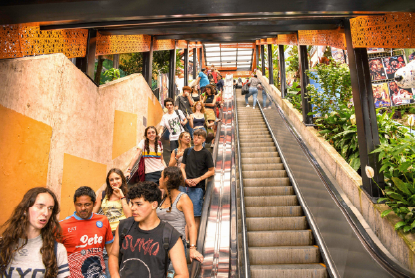
What came next was an unusual process: instead of abandoning the neighborhood to its fate, the city invested in it. Outdoor escalators were built, designed to connect the upper part of the hillside with the rest of the city and reduce commute times that previously took more than half an hour on foot. The Metrocable also arrived, integrating the commune into the mass transit system. The infrastructure solved a mobility problem, but it was the community itself that decided to use those very walls and stairs to tell its story.
Graffiti as memory, not decoration
Before going up to Comuna 13, it is worth making one thing clear: the murals you see today are not generic street art put there just for a photo. Each one responds to a specific story, whether it is a tribute to a victim of the conflict, a social critique, or a celebration of the Afro and Paisa identity that coexists in the neighborhood. Local artist collectives, many of them young people who grew up in the comuna during the most difficult years, continue to produce new works and maintain existing ones.
This is precisely what a local guide brings and a self-guided tour cannot replicate: the context behind every wall. Without that narrative, Comuna 13 remains just a pretty postcard. With it, it becomes a lesson in recent history told by those who experienced it firsthand.
What does a full tour of Comuna 13 include today
A well-crafted tour combines multiple layers of the experience, not just the photograph in front of the best-known murals:
- Going up the escalator, stopping at each section where the style and theme of the murals change
- Historical explanation of the conflict and transformation, including the context of Operation Orion and the social urbanism process that followed
- Meeting with the local hip hop and breakdance scene, which was born as a form of cultural resistance and today has live performances along the route
- Food stop, usually with a tasting of something typical of the area
- Free time to talk with local artists and merchants, many of whom live off the tourism that now arrives in the neighborhood
The difference between a good tour and a superficial one lies in the time dedicated to that second layer: history. A one-hour tour is barely enough to see the murals; a multi-hour one allows you to understand them.
Why experiencing it with a local guide makes a difference
Walking through Comuna 13 without a guide is entirely possible; it is a safe neighborhood with good signage for tourists. But you miss the very thing that makes it unique: firsthand storytelling. Many of the guides working in the area today were born or raised there, and some even lived directly through the hardest years of the conflict. Hearing that story told by someone who lived it completely changes the experience, and it is also a concrete way for tourism to leave an economic benefit in the very community that rebuilt the neighborhood.
Our Comuna 13 tour with Metrocable It is structured exactly under that logic: local guide, complete tour of the stairs and murals, live hip hop show, and a traditional tasting at the end, in a tour lasting approximately 5 hours.
How to combine it with the rest of your visit to Medellín
If you only have one day in the city, Comuna 13 combines very well with the classic downtown historical tour. Our City Plus Combine both into a single full-day outing, ideal for those who want to see both traditional Medellín and its most transformative side without having to choose between one or the other.
If you prefer to also add an excursion out of the city, the Turibus Combo Integrate Comuna 13 along with the City Tour and the Guatapé tour into a single multi-day package.